The Chain
Iron links that define every boundary the boy must cross to be free.

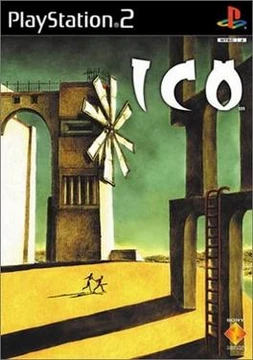
The Chain is the defining restraint of ICO, the 2001 PlayStation 2 action-adventure developed by Team Ico under director Fumito Ueda. It is the iron binding that holds the silent boy protagonist to a stone post in the game's opening courtyard, and it reappears throughout the castle as a recurring obstacle, puzzle element, and narrative symbol of captivity and control imposed by the castle's unseen rulers.
Rather than a single collectible, the chain functions as a design language: it marks what is forbidden, what must be cut, and what must be endured. Its presence frames the entire journey from ICO's initial imprisonment to the moments where he must free himself and Yorda from further bindings.
- Game
- ICO
- Platform
- PlayStation 2
- Developer
- Team Ico / Polyphony Digital
- Director
- Fumito Ueda
- Release year
- 2001
- Role
- Primary restraint and recurring puzzle obstacle
- First appears
- Opening scene, courtyard post
Lore & Background
In the world of ICO, the chain is not merely a physical object but an expression of the castle's will. The boy is bound at the story's outset, his wrists and neck locked to a pillar in a wide, rain-slicked courtyard. The chain is heavy, cold, and deliberate: it is the first thing the player sees and the first thing the player must overcome. Its links are thick, rusted, and industrial in design, contrasting with the organic, weathered stone of the castle around it.
Throughout the castle's many wings, towers, and flooded lower halls, chains appear as gates, as bindings on Yorda, and as obstacles spanning chasms. They are never decorative. Each chain the player encounters represents a specific restriction placed by the castle's authority, and each one that is cut, unclasped, or navigated around marks a small act of defiance. The chain is the castle's voice made physical: it says *you do not go there, you do not take her, you do not leave.*
Narratively, the chain also mirrors the relationship between ICO and Yorda. She, too, is bound—first by the castle's shadow-keeping, later by literal iron in specific sections. The act of freeing her, of holding her hand while she is in her shadow form, becomes the emotional counterweight to the chain's cold authority. Where the chain binds, the hand holds. Where the chain restricts, the torch illuminates a path forward.
In Their Own Story
Rain hammers the courtyard in long, silver sheets. The boy kneels before the post, his fingers tracing the cold links one by one. There is no key. There is no weapon. There is only the weight of the iron and the sound of water pooling around his knees. He pulls. The chain groans. He pulls again, and a single link, worn thin by years of rain and rust, snaps with a sound like a bone breaking. The rest of the chain swings free, slapping against the wet stone. He stands. He does not look back at the post. Somewhere above, in the dark mouth of the castle, a door creaks open, and a small shadow watches him from the threshold, waiting to see if he will come for her.
Reader's Guide
THE CHAIN Mechanically, the chain is the game's primary environmental obstacle and puzzle element. It appears as bindings on ICO at the start, as restraints on Yorda in specific tower and hall sections, and as spans across gaps that must be navigated or cut. The opening chain is removed by the player through a brief sequence of pulling and unclasping. Later chains are cut with the sword or bypassed through platforming. Narratively, every chain is a statement of the castle's control; freeing yourself from one is a small act of liberation that builds toward the game's larger theme of breaking free from imposed identity and purpose.
THE TORCH The torch is ICO's constant companion and the game's central tool. Mechanically it illuminates dark passages, reveals hidden ledges and platforms, and—critically—keeps Yorda in her stable human form. When the torch is extinguished or Yorda strays into unlit areas, she reverts to her shadow form and becomes nearly impossible to grab or guide, turning a simple traversal into a tense, fumbling struggle. The torch is thus both a practical light source and a lifeline: without it, Yorda is lost to the dark. Symbolically, it represents ICO's agency and his role as protector; the light he carries is the only thing anchoring her to the world he knows.
THE SWORD The sword is found briefly mid-game and used almost exclusively to cut a chain blocking a passage. It has no sustained combat role, no upgrade path, and no secondary function. It is, in design terms, an afterthought: a single-purpose tool that exists to solve one specific puzzle and is then set aside. Its presence is notable precisely because of its absence elsewhere—ICO is not a warrior, and the sword underscores that the game's conflicts are navigational and emotional rather than martial.
THE KEY Keys in ICO open specific doors that gate progression into new castle wings. Mechanically they are simple: find the key, insert it, walk through. But narratively they function as narrative beats—each key represents a permission granted by the castle, a conditional right of passage. You are allowed to go further, but only because the castle permits it. The key is thus a small, quiet reminder that ICO's freedom is always mediated, always conditional, until the final act.
THE ROPE Rope appears in a handful of traversal sections, allowing ICO to swing across gaps or climb vertical faces. Mechanically it is a brief platforming aid. Narratively it echoes the chain: both are linear, taut connections between two fixed points, but the rope is something you choose to hold and release, whereas the chain is something imposed. The rope is a bridge; the chain is a wall. The distinction is the game's quiet argument about agency.
Did You Know?
- The chain is the very first interactive element the player encounters, appearing in the game's opening seconds before any dialogue or menu.
- ICO was developed by a small, dedicated team at Polyphony Digital, and director Fumito Ueda later went on to create The Last Guardian.
- The chain motif recurs in multiple forms throughout the castle—on ICO, on Yorda, and as environmental obstacles—making it a structural design element rather than a one-time prop.
- The game's central mechanic of holding Yorda's hand while she is in shadow form was designed to convey vulnerability and trust without a single line of dialogue.
Elsewhere in the Ico universe
Spotted an error? Know more?
This is a living reference — every entry is fact-audited, and reader corrections feed straight into our audit queue. Suggest an edit · See this site's audit record