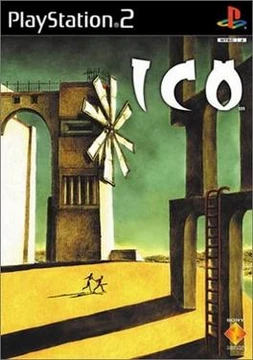
The Rope
A single thread of hemp over the void—the only thing between Ico and the dark below.

The rope is a fixed environmental traversal object in Ico (2001), the PlayStation 2 action-adventure developed by Team Ico at Sony Computer Entertainment Japan Studio under director Fumito Ueda. Unlike the torch or the blade, the rope is not a carried inventory item; it hangs at specific points within the castle ruins and is used solely to swing Ico across chasms and broken walkways. It appears a small number of times across the game's levels, each instance serving as both a physical obstacle to overcome and a narrative beat marking a threshold in Ico's journey to free Yorda.
Mechanically, the rope-swing is a timing puzzle: Ico grabs the hanging rope, swings in an arc, and must release at the correct moment to land on the far ledge. Fail and he drops into the dark below, resetting the section. Because the rope is the only traversal tool of its kind, each encounter feels deliberate and isolated, punctuating the otherwise hand-holding and puzzle-solving flow of the game.
- Type
- Environmental traversal object (not carried)
- Function
- Swing across chasms and broken walkways
- Persistence
- Fixed location; appears at specific points in the level
- First appears
- Ico (PlayStation 2, 2001)
- Developer
- Team Ico, Sony Computer Entertainment Japan Studio
- Director
- Fumito Ueda
- Interaction
- Grab, swing, release at correct timing to land on far ledge
Lore & Background
In the world of Ico, the castle is a labyrinth of collapsed corridors, sunken floors, and chasms so wide that no bridge spans them. The ropes that hang from broken beams and shattered archways are remnants of the structure's original purpose—perhaps for hauling, perhaps for ritual. They are old, frayed at the edges, and they creak under Ico's weight. Each rope is placed where the architects of the castle intended a passage to exist but the ruin has since swallowed it, leaving only a thread of material to cross the gap.
Narratively, the rope functions as a moment of solitary risk. For most of the game, Ico's primary concern is Yorda—holding her hand, keeping the torch lit, guiding her through shadow. When he must swing on a rope, Yorda waits on the near ledge, her small form silhouetted against the grey stone. The rope thus isolates Ico from his companion for a brief, tense beat, making the crossing feel like a personal trial separate from their shared journey. It is a reminder that the castle tests the boy and the girl as individuals before reuniting them on the other side.
The rope also echoes the game's broader visual language of thin, fragile connections. Ico's outstretched hand gripping Yorda's, the wick of the torch barely catching the dark, the rope strung across an abyss—all are slender lines holding weight. The castle is a place where structure has failed, and these thin objects are what remains of the order that once held it together.
In Their Own Story
The ledge ends. Beyond it, nothing but a grey throat of stone descending into a dark Ico cannot fathom. Yorda stands at the very edge, her horned head tilted, watching the nothing below. She does not step forward. She does not need to. Ico knows what he must do.
He reaches up. His fingers close around the rope—coarse, damp, smelling of old water and rust. He swings. The world tilts. For a heartbeat he is airborne, his boots scraping the air, Yorda's small shape shrinking behind him on the ledge. The rope groans. His grip burns. He lets go.
He lands hard, boots skidding on the far stone. Behind him, the rope swings back and forth, empty, a metronome counting the seconds until Yorda's footsteps echo across the walkway. She is there. Her hand finds his. The torch is lit. They walk on.
Reader's Guide
The rope is a fixed environmental object, not a carried item. It hangs from a beam or arch at a specific point in the level, spanning a chasm or broken walkway. Mechanically, Ico grabs the rope, swings in a pendulum arc, and must release at the correct moment to land on the far ledge. Timing is the core challenge: release too early and he falls short into the dark; too late and he overshoots. There is no stamina bar or secondary input—just grip, arc, and release. Each rope appears only once in the game and is encountered in a specific puzzle context, making it a narrative gate as much as a traversal tool.
In contrast, the torch is a persistent carried item. It serves a dual purpose: it is a light source in the dark castle corridors, and it is Yorda's lifeline. When the flame goes out, Yorda is pulled toward shadow and must be retrieved. The torch thus represents Ico's protective role and the constant vigilance the journey demands.
The blade (a short sword) is found in one or two spots and used to fight shadow creatures. Its presence is almost an afterthought in an otherwise non-combat game; it exists to clear a path, not to define the experience. The key, meanwhile, is a pure narrative beat: it opens a specific door and is never used again. Like the rope, it marks a threshold rather than a skill. Both the key and the rope gate progress through story logic rather than mechanical mastery.
Did You Know?
- The rope-swing in Ico is a timing-based mechanic with no secondary button input—grip, swing, release—and a failed swing drops Ico into the chasm, resetting the section.
- Ico was developed by a very small team within Sony Computer Entertainment Japan Studio, and director Fumito Ueda later went on to direct Shadow of the Colossus.
- Unlike the torch or the blade, the rope is never added to Ico's inventory; it exists only at its fixed point in the level and cannot be carried between sections.
- The rope-swinging sections are brief and isolated, appearing only a handful of times across the entire game, which keeps the focus on the hand-holding and puzzle-solving that define Ico's identity.
Elsewhere in the Ico universe
Spotted an error? Know more?
This is a living reference — every entry is fact-audited, and reader corrections feed straight into our audit queue. Suggest an edit · See this site's audit record