The ending sequence
One hand, one pull, and a walk into the light that never ends.

The ending sequence of ICO is the climactic resolution of the player's journey through the castle complex. After guiding Yorda through every tower, bridge, and dark corridor, the two reach a vast open plateau where the forces that created Yorda make their final attempt to reclaim her. The sequence reduces the game's entire vocabulary—holding a hand, pulling, walking side by side—into one sustained, wordless act of rescue and departure.
It functions as the emotional payoff for a game that never once uses spoken dialogue. Every mechanic the player has practiced, from gripping Yorda's hand to steadying her on crumbling ledges, converges into a single physical gesture: pulling her free from the darkness and walking away together into the distance.
- Game
- ICO
- Developer
- Team Ico, Sony Computer Entertainment
- Platform
- PlayStation 2
- Release year
- 2001
- Protagonist
- ICO (a boy)
- Companion
- Yorda (a girl of shadow)
- Core mechanic in ending
- Hand-holding and pulling
Lore & Background
Throughout ICO's castles, Yorda is tethered to the dark architecture by unseen forces. Each time she is touched by shadow, black tendrils erupt and drag her backward, and the player's only response is to grip her hand and pull. The ending sequence is the largest and most desperate expression of this dynamic: on the final open plateau, the darkness surges with full force, and Yorda is dragged toward a churning mass of shadow that seems to swallow the ground itself.
The game asks nothing of the player beyond what they have already done a hundred times—hold on, pull, do not let go. There is no combat, no inventory, no timing challenge. The tension is purely relational: the controller transmits a low, grinding resistance as Yorda is pulled against the dark, and the player must sustain that effort until the tendrils release. The moment they do, the music swells and the two figures turn away from the castle.
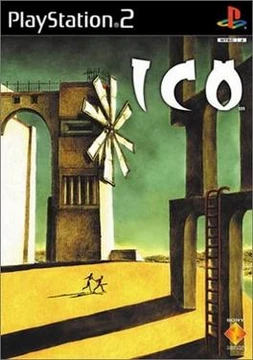
The final image is deliberately static and quiet: ICO and Yorda, seen from behind, walking hand in hand across a pale field toward a soft horizon. They do not look back. The credits roll over this single, unbroken shot, and the game ends. In a medium defined by spectacle, ICO closes with stillness and the simple fact of two small figures choosing to leave together.
In Their Own Story
The wind off the plateau carries no sound but the dry scratch of grass. Yorda's fingers are cold in his. He can feel the dark still pressing against the back of her hand, a slow tide pulling at her wrist like a rope being drawn through a ring. He tightens his grip. The ground beneath her feet shivers, cracks, and the black things rise—long, wet, reaching. She gasps a sound that is not a word. He pulls. His arms burn. The controller in his hands shudders with the resistance, and for a long, breathless moment neither of them moves. Then the tendrils slacken. Then they are gone. He does not let go of her hand. He turns. She turns. They walk, and the castle falls behind them, and the light ahead is the only thing that matters.
Reader's Guide
The ending sequence strips ICO to its single verb: pull. You are standing on an open plateau, Yorda at your side, and the dark surges. Black tendrils erupt from the ground and seize her, dragging her backward. Your only input is to hold her hand and pull. The controller transmits a low, grinding resistance—you feel the weight of the dark on the stick, a physical tug that makes the gesture feel less like a button press and more like straining against a current. You must sustain that pull until the tendrils release. There is no combo, no timing window. The game is testing whether you will keep holding on.
This redefines co-op in a single-player context because Yorda is not an AI companion executing a script. She is a small, vulnerable body that resists you, that you must actively keep in the world. The hand-holding is not a UI prompt; it is the entire relationship. When the dark finally lets go, the game does not reward you with a score or a cutscene. It simply lets you walk. You turn both figures away from the castle and stroll forward, hand in hand, across a quiet field. The camera holds. The credits begin. The tenderness of the ending comes from the absence of spectacle: the game trusts that holding someone's hand through the worst moment is enough, and that walking away together is the whole point.
Did You Know?
- ICO contains no spoken dialogue; the only vocalization in the entire game is ICO calling out the name 'Yorda' a handful of times.
- The hand-holding mechanic that defines the ending was the design team's central constraint from the earliest prototypes—every other system was built around the idea of one character physically guiding another.
- The final walk-away shot is captured in a single continuous camera take with no cuts, holding on the two figures until they are nearly lost in the haze before the credits roll.
- Team Ico was a small, dedicated unit within Sony Computer Entertainment, and ICO was conceived as a single, self-contained experience rather than the first entry in a series.
More in Gameplay & Mechanics
Elsewhere in the Ico universe
Spotted an error? Know more?
This is a living reference — every entry is fact-audited, and reader corrections feed straight into our audit queue. Suggest an edit · See this site's audit record