Shadow creatures
They cannot be killed, only outrun — and they always want Yorda.

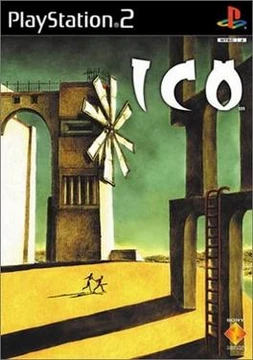
Shadow creatures are the primary antagonists of ICO, the 2001 action-adventure game developed by Team Ico and published by Sony Computer Entertainment for the PlayStation 2. They are tall, gaunt, dark humanoid figures with glowing eyes that stalk the player through the castle corridors, the surrounding forest, and the ancient ruins. They never speak, never attack directly, and cannot be killed — they simply pursue, creating a persistent, inescapable sense of dread that defines the game's tone.
Their role is that of an ever-present environmental threat rather than a boss to be defeated. They are drawn to Yorda's glowing hair and to the light Ico carries, making the act of protecting Yorda the central tension of every encounter. The player's only tools are evasion, spatial awareness, and the ability to throw bones to distract them long enough to slip past.
- Type
- Primary antagonist / environmental threat
- Behavior
- Stalks and pursues; cannot be killed
- Weakness
- Temporarily distracted by thrown bones; drawn to light
- Primary target
- Yorda (attracted to her glowing hair)
- First appears
- Castle corridors (early game)
- Game
- ICO (2001, PlayStation 2)
Lore & Background
The shadow creatures inhabit the castle and the lands around it as though they are part of the architecture itself — extensions of the stone, the corridors, the dark spaces between rooms. The game never offers an explicit explanation for their origin or purpose. They simply are: a constant, silent pressure that the player must navigate around. Their presence implies a world where the castle is not merely a location but a living, hostile system, and where Yorda's light is an anomaly that the system seeks to extinguish.
Their behavior is deliberately inhuman. They do not charge or lunge. They pace, circle, and close distance in slow, deliberate steps, as though they have all the time in the world. This patience is what makes them terrifying. They are not reacting to the player; they are processing, turning, always reorienting toward the source of light. In the forest and ruins, where the spaces open up, they come in small groups, and the player must manage the geometry of multiple pursuers at once.
The game's narrative is told almost entirely through environment and action, and the shadow creatures are its emotional engine. They are the reason Ico holds Yorda's hand, the reason every corridor feels like a held breath, the reason the player's relationship with a silent, non-verbal companion becomes the game's true story. They are the dark that makes the light matter.
In Their Own Story
The torch sputters. Ico stops, and the silence that follows is worse than the sound. Down the corridor, past the broken archway, the first one is already turning. Its eyes catch the torchlight — two pale points in a face that is not quite a face. It does not run. It does not need to. It simply shifts its weight, tilts its long head, and begins to walk. Behind it, a second shape peels away from the wall, and a third, further back, is already rounding the next bend.
Yorda's hand is small in his. Her hair catches the torchlight and throws a thin golden thread across the flagstones, and he can see them following that thread the way a dog follows a scent. He tightens his grip. She does not look at him. She never does. She only walks, and the walking is the whole of what she is, and the whole of what he is for.
He throws the bone. It clatters against the far wall. The nearest one stops, turns, and follows the sound with that slow, grinding patience. He has three seconds. Maybe four. He pulls her around the corner, into the narrow gap between the pillar and the wall, and they stand very still while the dark figures pass, close enough that he can feel the cold of them brush his sleeve. Then the corridor is empty again, and the torch is still burning, and her hand is still in his, and the next corridor is already waiting.
Reader's Guide
Encountering a shadow creature is the game's primary source of sustained tension. You hear them before you see them — a low, rhythmic scraping that echoes off stone walls. When one rounds a corridor, you have a few seconds to decide: run, hide, or throw a bone. Throwing a bone sends it stumbling toward the distraction, buying you a short window to slip past. The game asks you to read its movement, to understand that it will always turn back, and to time your escape to that turning point.
The hand-holding changes everything. When you grip Yorda's hand, your movement slows and your turning becomes deliberate. A shadow creature in the next corridor is no longer something you can outrun — it is a problem you must solve with geometry and patience. You must find the alcove, the narrow passage, the moment it loses sight of you. The vulnerability is real: if it reaches Yorda, the screen darkens and you restart the section.
In the forest and ruins, the spaces open up, but the creatures come in pairs or small groups, forcing you to manage multiple threats at once. You throw a bone left, sprint right, and hope the second one has not already found the light in Yorda's hair. The tension is never resolved by combat. It is resolved by the world itself — by the architecture, the timing, and the fragile bond between two figures moving through the dark.
Did You Know?
- Shadow creatures cannot be killed under any circumstances; the player's only options are evasion, hiding, or temporary distraction with thrown bones.
- They are specifically drawn to Yorda's glowing hair, making her the primary target even when Ico is the one visible in the corridor.
- They appear throughout the entire game — in the castle, the forest, and the ruins — rather than being confined to specific boss encounters or set-piece sequences.
- Their movement is deliberately slow and deliberate; they never sprint or lunge, relying instead on patience and the certainty that the player cannot escape indefinitely.
More in Gameplay & Mechanics
Elsewhere in the Ico universe
Spotted an error? Know more?
This is a living reference — every entry is fact-audited, and reader corrections feed straight into our audit queue. Suggest an edit · See this site's audit record