Platforming and traversal
A boy's steady hand and a girl's shadow tendrils turn every chasm into a promise kept.

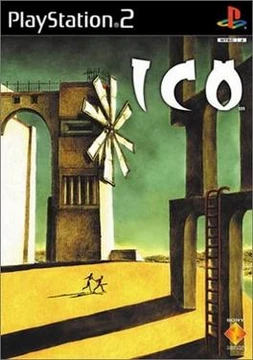
Platforming and traversal in Ico (2001, Team Ico / SCE Japan Studio) refers to the physical navigation of the game's vast, ruined castle-and-island environment. Ico runs, leaps, climbs, and squeezes through crumbling architecture, narrow cliff ledges, forest paths, and water channels, all while managing the fragile tether of Yorda's hand. The traversal is deliberately restrained in its mechanical vocabulary—no dash, no double-jump, no wall-running—yet the scale of the spaces and the constant threat of shadow creatures turn every crossing into a small act of courage.
- Developer
- Team Ico (SCE Japan Studio)
- Director
- Fumito Ueda
- Platform
- PlayStation 2
- Release year
- 2001
- Genre
- Action-adventure / Puzzle
- Dialogue
- None (fully non-verbal)
- Traversal verbs
- Run, jump, climb, pull, hold hand
Lore & Background
The castle in Ico is not a dungeon to be conquered but a landscape to be crossed. Its corridors, courtyards, and cliffside walkways were built for a purpose long forgotten, and now they stand half-swallowed by ivy, water, and the creeping dark of the shadows. Ico moves through this space with the unhurried gait of someone who knows the way, yet the architecture keeps testing him: a bridge with missing slats, a ledge too narrow for two, a gap where the floor simply ends and the river begins far below. The castle does not punish; it asks. It asks whether Ico will stop, turn back, or extend his hand.
In Their Own Story
The bridge is three planks wide and the river below is black glass. Ico stops at the first gap. Yorda stops behind him, her tendrils curling into the stone like fingers testing a cold rail. He does not look down. He looks at her. He takes her hand. The first plank holds. The second groans. On the third, a shadow rises from the water, and Ico's grip tightens—not with fear, but with the specific, bone-deep certainty of a boy who has decided that the other side is where they both end up. Yorda's tendrils flatten against the wood. They cross. The island exhales.
Reader's Guide
The platforming in Ico is almost deceptively simple: you run, you jump a gap, you climb a ledge, you squeeze through a crack. There is no meter, no combo, no precision-timing gate. What makes a traversal tense is not the jump itself but what surrounds it. A corridor narrows to a single-file passage and Yorda's tendrils catch on the edges; you must stop, back up slightly, and pull her through with the pull button while a shadow skitters along the wall. The game asks you to be patient, to wait for the right moment, rather than fast. This creates a tenderness that pure reflex games rarely achieve: you are not beating a level, you are escorting someone through it.
The hand-holding redefines co-op. There is no second player, no split screen. Yorda is an NPC who follows, who can be grabbed, who needs to be pulled. Yet the emotional grammar is identical to a partner in a co-op platformer: you manage two bodies, one of which is more vulnerable. When a shadow seizes Yorda, the camera doesn't shift to her; it stays on Ico's hands, on the strain of the pull. The vulnerability is yours to feel, not hers to display.
Puzzles are woven into traversal rather than bolted on. A sequence might require you to cross a chasm, then use Yorda's tendrils to reach a switch, then backtrack while shadows close in. The environment is the puzzle: the castle's broken architecture presents a path that is *almost* walkable, and the almost is where the tension lives. You read the space, you plan the route, you commit—and the castle either holds or it doesn't. There is no checkpoint within the crossing; there is only the river, the dark, and the hand you are holding.
Did You Know?
- Ico's entire traversal vocabulary is limited to run, jump, climb, and pull—no dash, no double-jump, no wall-run—yet the game's environments are large enough that this minimal set never feels repetitive.
- Yorda's shadow tendrils serve a dual purpose: they are a visual identity and a functional tool, allowing her to grip ledges and reach objects Ico cannot, which subtly shifts the puzzle-solving dynamic mid-level.
- The game contains no spoken dialogue, no on-screen text prompts, and no tutorial; the player learns the hand-holding and pulling mechanics purely through environmental context and failure.
- Team Ico was a small internal group at SCE Japan Studio formed specifically to produce Ico, and the game's traversal design reflects a single director's (Fumito Ueda) vision rather than a committee's.
More in Gameplay & Mechanics
Elsewhere in the Ico universe
Spotted an error? Know more?
This is a living reference — every entry is fact-audited, and reader corrections feed straight into our audit queue. Suggest an edit · See this site's audit record