SCE Japan Studio
Three games, one bond, fifteen years of silence carved into stone.

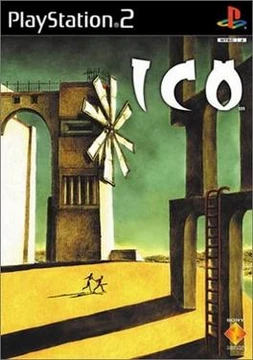
SCE Japan Studio was a first-party video game development studio operated by Sony Computer Entertainment (SCE), based in Tokyo, Japan. It is best remembered as the home of Fumito Ueda and his three landmark titles: Ico (2001), Shadow of the Colossus (2005), and The Last Guardian (2016). The studio's output was deliberately sparse—three games over fifteen years—each one a slow, meditative exploration of a single bond between a protagonist and a companion, set against a vast, mostly empty world.
The studio's legacy is inseparable from the design philosophy Ueda brought to it: minimal dialogue, a single recurring antagonist or obstacle, and a mechanical relationship between two characters that replaces exposition with physical proximity. When the studio was eventually closed and its staff absorbed back into SCE's broader structure, the Ueda trilogy stood as its complete body of work, a small canon that outgrew the company that housed it.
- Type
- First-party game development studio
- Parent company
- Sony Computer Entertainment (SCE)
- Location
- Tokyo, Japan
- Key director
- Fumito Ueda
- Notable titles
- Ico (2001), Shadow of the Colossus (2005), The Last Guardian (2016)
- Status
- Closed; staff absorbed into SCE
Lore & Background
SCE Japan Studio existed within the broader Sony Computer Entertainment structure as a small, independent-feeling unit in Tokyo. While SCE's other divisions churned out high-volume first-party titles, Japan Studio operated on a different clock. Its most visible output was the work of Fumito Ueda, whose design sensibility—sparse text, a single recurring threat, a companion whose hand you literally hold—became the studio's de facto identity. The studio did not market itself as a 'Ueda studio,' but the three titles that bore his name were the ones the world remembered.
The development culture, as described in post-release interviews and making-of material, emphasized iterative prototyping and long stretches of silence between design decisions. Ueda would build a mechanical toy—a hand-holding system, a colossus that walks in slow circles, a creature that reacts to a child's gaze—and let the team find the narrative in the gaps. There were no cutscene departments in the traditional sense; the story was the physics of two characters moving through a space.
When the studio was wound down, the question in the industry was not 'what will they make next?' but 'will the next Ueda game ever ship?' The Last Guardian, in development for over a decade, became a test case for whether a single designer's vision could survive the institutional churn of a parent company. It shipped in 2016, and the studio's chapter closed.
In Their Own Story
The office is on a quiet street in Minato. The light through the blinds is the flat white of a Tokyo overcast. A developer sits at a desk with a small wooden block in front of her—the kind of thing you'd find in a child's toy box. She turns it slowly. On one face, a carved hand. On another, a carved eye. She sets it down, picks up her stylus, and draws a line from the hand to the eye. No one asks what the line means. No one needs to. The line is the whole game. Outside, a delivery truck idles. Inside, the only sound is the soft click of a key being pressed, held, and released, like a door opening onto a field of grass that goes on forever.
Reader's Guide
Ico shipped in 2001 and the industry blinked. A PS2 game with almost no text, no HUD, no inventory, just a boy and a girl and a castle that kept trying to pull them apart. SCE Japan Studio had built it in a small Tokyo office with a team that treated the hand-holding mechanic as the entire narrative engine. The world received it as a curiosity, then as a classic.
Then came Shadow of the Colossus. What carried over was the architecture of the bond: a protagonist and a companion (now a horse, now a sword) moving through a deliberately empty world toward a single, slow, recurring antagonist. The minimalism deepened—fewer characters, fewer words, more wind. What broke away was the hand. You could no longer hold Yorda. The connection became a leash, a weight, a choice you made every time you reined in the horse. The colossus structure—kill one, the world shifts slightly, kill the next—was a new grammar. The single-antagonist idea survived, but it multiplied into sixteen.
The Last Guardian arrived in 2016 after a development period so long it became a cultural footnote. The bond returned: a boy, a creature, a hand. The minimalism held. The single-antagonist structure dissolved into an environment that was itself the obstacle. SCE Japan Studio, by then, no longer existed as a named entity. The games outlived the room where they were made.
Did You Know?
- All three of SCE Japan Studio's best-known titles— Ico, Shadow of the Colossus, and The Last Guardian—were directed by the same person, Fumito Ueda, making the studio's output a single author's body of work rather than a
- Ico's hand-holding mechanic required the player to physically keep two characters within a small radius on screen; if the distance exceeded a threshold, the bond broke and the companion could be seized by the game's anta
- The Last Guardian entered development before Shadow of the Colossus was complete, meaning the studio was simultaneously working on two of its three major titles during the mid-2000s.
- SCE Japan Studio's three landmark games span PS2 and PS4 with no PS3 title among them, a gap that mirrors the studio's deliberate, low-volume development philosophy.
More in Development & Legacy
Elsewhere in the Ico universe
Spotted an error? Know more?
This is a living reference — every entry is fact-audited, and reader corrections feed straight into our audit queue. Suggest an edit · See this site's audit record