Team ICO
A visionary studio crafting silent, atmospheric adventures through minimalism and emotional depth.

Team ICO is an informal internal team at Sony Computer Entertainment Japan, not a formally founded studio. It is best known for creating atmospheric adventure games that prioritize emotion and visual storytelling over traditional mechanics. The team coalesced around Fumito Ueda during the development of Ico, which began in 1997 with producer Kenji Kaido. After Ico's release, Ueda was granted his own unit specifically for his projects, rather than to assist on games from other Japanese developers. The core team for Ico consisted of about a dozen people, including Ueda and Kaido, with some members brought in from outside the video game industry.
- Founder
- Fumito Ueda (lead, not formal founder)
- Affiliation
- Sony Computer Entertainment Japan (internal team)
- First Project
- Ico
- Notable Works
- Shadow of the Colossus
- Design Philosophy
- Minimalist storytelling and emotional connection
Verified Timeline
Lore & Background
Ico's design aesthetics were guided by three key notions: to make a game that would be different from others in the genre, feature an aesthetic style that would be consistently artistic, and have an imaginary yet realistic setting. This was achieved through the use of 'subtracting design'; elements which interfered with the game's immersion were removed. This included removing any form of interface elements, keeping the gameplay focused only on escaping the castle, and having a single enemy type. The game contains no user interface details, such as displaying health points on the screen. Ueda commented that he purposely tried to distance Ico from conventional video games due to the negative image video games were receiving at that time, in order to draw more people to the title. An interim design of the game shows Ico and Yorda facing horned warriors similar to those who take Ico to the castle. The original focus was not on returning Yorda to her room; it was about escaping the castle together. Ueda believed this version was too detailed for the graphics engine they had developed and, as part of the 'subtracting design', replaced the warriors with the shadow creatures. On reflection, Ueda noted that the subtracting design may have taken too much out of the game, and did not go to as great an extreme with Shadow of the Colossus.
In Their Own Story
The wind howls across the endless grasslands, carrying no sound but the heavy breath of a giant beast. A lone rider sits atop his steed, looking out at a colossal figure that blocks the sun. There is no music, only the crunch of hooves on dry earth and the distant rumble of awakening stone. In this silence, the boy understands that to move forward, he must climb the impossible.
Reader's Guide
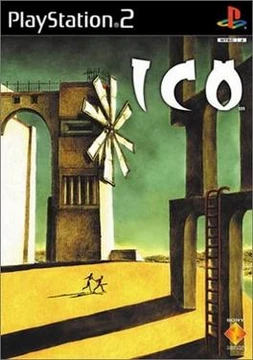
Team ICO was established within Sony Computer Entertainment Japan in 1998 to develop Ico. The studio operated as an internal unit rather than a fully independent subsidiary during its early years. Their debut title launched on the PlayStation 2 in 2001 and received universal critical acclaim for its unique art direction and emotional narrative, though it sold modestly compared to mainstream action titles. The game took approximately four years to develop. Originally planned for the PlayStation, the team ran into limitations on PlayStation hardware after two years of development and faced a critical choice: either terminate the project altogether, alter their vision to fit the constraints of the hardware, or continue to explore more options. The team decided to remain true to Ueda's vision, and began to use the PlayStation 2's Emotion Engine, taking advantage of the improved abilities of the platform. Character animation was accomplished through key frame animation instead of the more common motion capture technique. Ueda intentionally left the ending vague, not stating whether Yorda was alive, whether she would travel with Ico, or if it was simply the protagonist's dream. In 2006, Ico was re-released in Europe alongside Shadow of the Colossus, the spiritual successor to Ico. A high-definition remaster of the game was included in The Ico & Shadow of the Colossus Collection for the PlayStation 3.
Did You Know?
- The development period for Ico spans approximately four years (1997–2001), not three.
- Ueda created a three-minute demonstration reel in Lightwave to convey his vision, in which Ico had the horns instead of Yorda.
- Ico uses minimal dialogue in a fictional language; voice actors included Kazuhiro Shindō as Ico, Rieko Takahashi as Yorda, and Misa Watanabe as the Queen.
- A two-player co-op mode where a second player controls Yorda was only available in the North American release, not in the original European or Japanese releases.
Origins and Design Philosophy
Fumito Ueda conceived the core concept for Ico in 1997, driven by a desire to craft a minimalist narrative centered on a 'boy meets girl' dynamic. His inspiration stemmed from diverse sources, including a television commercial showing a woman holding a child's hand in a forest and the manga series Galaxy Express 999. Ueda also drew heavily from his previous work as an animator on Enemy Zero, which influenced the game's mature tone, sound design, and lighting effects. Additionally, he looked to Another World for its cinematic approach and lack of traditional heads-up displays. Originally intended for the PlayStation, development spanned four years before launching on the PlayStation 2 in 2001. The team adopted a 'subtracting design' methodology, deliberately stripping away standard gameplay elements that might distract from the atmosphere or story. This rigorous reduction aimed to maximize player immersion, ensuring every mechanic served the unique emotional and visual setting of the abandoned castle.
Gameplay Mechanics and Interaction
As an action-adventure title, Ico places players in control of a horned boy navigating a sprawling, decaying fortress from a third-person perspective. The camera system is largely fixed but swivels to track movement, allowing limited panning for environmental observation. Gameplay blends platforming challenges with puzzle-solving, requiring the player to jump, climb, and manipulate objects to progress. A defining mechanic involves the relationship between Ico and Yorda; while Ico performs all physical actions, Yorda is physically limited but essential for opening gates with her white energy. Players must guide her through obstacles, lift her over barriers, or hold her hand to increase movement speed. The primary threat comes from shadow creatures that attempt to drag Yorda into black vortexes if she strays too far. Ico can fight these entities with a stick or sword and rescue her, but the game ends immediately if she is fully engulfed. Save points are represented by stone benches where the pair rests, grounding the progression system in the narrative.
Narrative Arc and Symbolism
The story follows Ico, an outcast born with horns who is imprisoned in a stone coffin within an abandoned castle intended for sacrifice. After escaping his confinement following a tremor, he discovers Yorda, a captive girl magically linked to the fortress who can open gates but lacks self-defense capabilities. Together, they attempt to flee while evading shadowy minions sent by the Queen, who seeks to possess Yorda's body to extend her own life. Their journey culminates on a bridge where the Queen intervenes, causing Ico to fall and lose consciousness. Upon waking below the castle, Ico retrieves a magic sword and confronts the Queen after finding Yorda turned to stone. In the climactic battle, Ico slays the Queen but loses his horns in the process. As the castle collapses, a spectral version of Yorda rescues Ico, placing him on a boat that drifts to shore while she whispers 'Nonomori,' meaning thank you. The tale concludes with both characters awakening safely on a beach as the ruins fade into the distance.
Critical Reception and Enduring Legacy
Although Ico did not achieve massive commercial success upon its initial release, it garnered immediate critical acclaim for its artistic direction, original gameplay loop, and storytelling techniques. The game introduced influential elements such as bloom lighting, key frame animation, and a narrative conveyed with minimal dialogue, setting new standards for atmospheric gaming. It received numerous accolades, including multiple Game Developers Choice Awards and nominations for 'Game of the Year.' Over time, Ico has solidified its status as a cult classic and is frequently cited in discussions regarding video games as an art form. Its impact extended beyond its initial launch; it was re-released in Europe alongside its spiritual successor, Shadow of the Colossus, in 2006. Later, a high-definition remaster was included in The Ico & Shadow of the Colossus Collection for the PlayStation 3, ensuring that subsequent generations could experience Ueda's vision. Its unique blend of emotion and mechanics continues to inspire developers worldwide.
Gallery

Frequently Asked Questions
Who is Team ICO?
Team ICO is an internal development group at Sony Computer Entertainment Japan founded by visionary designer Fumito Ueda. The studio was established specifically to create atmospheric adventure games that prioritize emotional resonance and visual storytelling over complex mechanics.
What are Team ICO's core design principles?
The team is renowned for a minimalist philosophy that strips away traditional HUDs and dialogue in favor of environmental puzzles and silent narrative. Their approach focuses on creating deep emotional connections between the player, the protagonist, and the game world through isolation and scale.
Which games did Team ICO create?
Fumito Ueda led the team to produce two critically acclaimed masterpieces: Ico and Shadow of the Colossus. Both titles are celebrated for their unique artistic direction and profound impact on the adventure genre.
Why is Team ICO important in gaming history?
They revolutionized video game storytelling by proving that games could convey deep emotion without relying on cutscenes or heavy text. Their work inspired a new wave of developers to experiment with silence, minimalism, and environmental narrative design.
What happened to the team after their major titles?
While Fumito Ueda eventually moved on to other projects like The Last Guardian, the specific 'Team ICO' label remains synonymous with his distinct artistic vision within Sony. Their legacy continues to influence modern game design through their pioneering use of atmosphere and player agency.
More in Development & Legacy
Related in Ico
Links follow this subject's own source article.
Elsewhere in the Ico universe
Spotted an error? Know more?
This is a living reference — every entry is fact-audited, and reader corrections feed straight into our audit queue. Suggest an edit · See this site's audit record