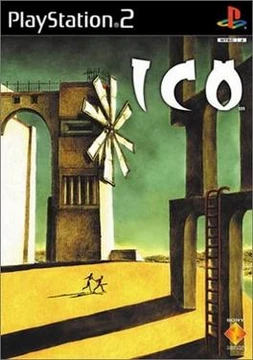
The Garden
Where stone cracks open and green swallows the silence of a forgotten castle.

The Garden is one of the overgrown outdoor courtyard spaces within the ruined castle complex in Ico (2001), the atmospheric action-adventure developed by Team Ico at Sony Computer Entertainment Japan and directed by Fumito Ueda. These spaces sit between the dark, enclosed interior corridors and the wider forest and coastal terrain, serving as transitional zones where nature has visibly reclaimed the stone architecture.
- Game
- Ico
- Developer
- Team Ico (Sony Computer Entertainment Japan)
- Director
- Fumito Ueda
- Original platform
- PlayStation 2
- Year
- 2001
- Setting context
- Overgrown courtyard within the ruined castle complex
Lore & Background
The castle in Ico is not merely a backdrop; it is a decaying organism whose floors shift in mood from claustrophobic dark rooms to open, sunlit courtyards. The garden spaces are where that organism breathes. Vines and moss have threaded through flagstones, roots have split walls, and the geometry of the original architecture is slowly being erased by patient, silent growth. There is no one tending these plants. They grow because nothing stops them, and the castle has been abandoned long enough for the boundary between built and wild to dissolve entirely.
For Yorda, these open garden spaces carry a specific danger that the interior corridors do not: exposure to direct sunlight. The interplay of dappled shade beneath overhanging branches and the harsh open sky above creates a spatial puzzle in itself, forcing Ico to guide her through pockets of shadow while the light shifts with the time of day. The garden is beautiful and threatening in equal measure, a place where the player must read the environment as carefully as a map.
The emotional register of the garden sections shifts the game's tone from the tense, puzzle-driven interior to something more contemplative and exposed. The player steps out of the castle's mechanical logic—levers, blocks, locked doors—into a space governed by weather, light, and the slow indifference of growing things. It is a pause, a held breath, before the journey continues toward the coast.
In Their Own Story
The flagstones are cold under your boots, and the air smells of wet earth and something faintly sweet, like crushed leaves. You step through the archway and the darkness of the corridor drops away behind you. Ahead, the courtyard opens into a grey-green canopy. Light falls in broken columns through the leaves, and where it touches the ground, the stone glows a pale, almost hostile gold. You glance at Yorda. Her fingers have gone translucent at the tips, the shadow already creeping up her wrists. You tighten your grip on her hand. She does not pull away. You walk slowly, reading the shadows between the roots, between the broken balustrade, beneath the overhang of a collapsed roof where moss has pooled like dark water. The garden does not care that you are passing through. It is only growing. It has always been growing. You find a patch of shade wide enough for both of you, and you wait, and the light drifts past like a slow tide, and Yorda's fingers solidify again, and you walk on.
Reader's Guide
The garden spaces in Ico are encountered as the player transitions between the castle's interior floors and the outer forest or coastal areas. The mood shifts immediately: the tight, dim corridors give way to open sky, and the architecture becomes larger, more broken, more exposed. Crumbling columns, fractured arches, and half-collapsed walls frame the view, while moss, vines, and small trees have threaded through every gap. The lighting is the defining feature—dappled, shifting, and dangerous. Pools of sunlight on the flagstones are death zones for Yorda, so the player must navigate through the moving shadows cast by overhanging branches, broken rooflines, and the castle's own ruined geometry. The emotional tone here is one of exposed vulnerability after the enclosed safety of the interior. The player is outside, under the sky, and the world feels larger and less controllable. Obstacles in these spaces tend to be environmental rather than mechanical: gaps to cross, low walls to climb, and the constant negotiation with light. The garden does not lock you out with a puzzle; it asks you to read the world carefully and move with patience. It is a breathing space in the game's rhythm, a place where the castle's living-organism quality is most visible, where the stone is softening and the green is winning, and where the journey feels less like a sequence of rooms and more like a walk through something alive and indifferent.
Did You Know?
- Ico was developed by a small internal team at Sony Computer Entertainment Japan called Team Ico, led by director Fumito Ueda, and was one of the first games to showcase the PlayStation 2's ability to render large, open e
- Yorda's vulnerability to sunlight is not merely a gameplay restriction; it fundamentally shapes the spatial design of every open area in the game, including the garden courtyards, turning light itself into an environment
- Ico was initially released exclusively for the PlayStation 2 in 2001 and later became available on other platforms, but the original PS2 version remains the reference for its visual style and atmospheric direction.
- The game features very little spoken dialogue or on-screen text; nearly all narrative and emotional communication is carried through environment, movement, and the physical relationship between Ico and Yorda.
More in World & Locations
Elsewhere in the Ico universe
Spotted an error? Know more?
This is a living reference — every entry is fact-audited, and reader corrections feed straight into our audit queue. Suggest an edit · See this site's audit record